
During Cracker Barrel’s Q3 fiscal 2026 earnings call on June 9, CEO Julie Masino and CFO Craig Pommells spent considerable time discussing loyalty program growth, guest satisfaction scores, retail merchandising improvements, and the path forward for the core restaurant business. They did not mention Maple Street Biscuit Company once.
Not once.
That silence is deliberate. And it tells you more about the state of Cracker Barrel’s fast-casual acquisition than any press release would.
What Is Maple Street Biscuit Company
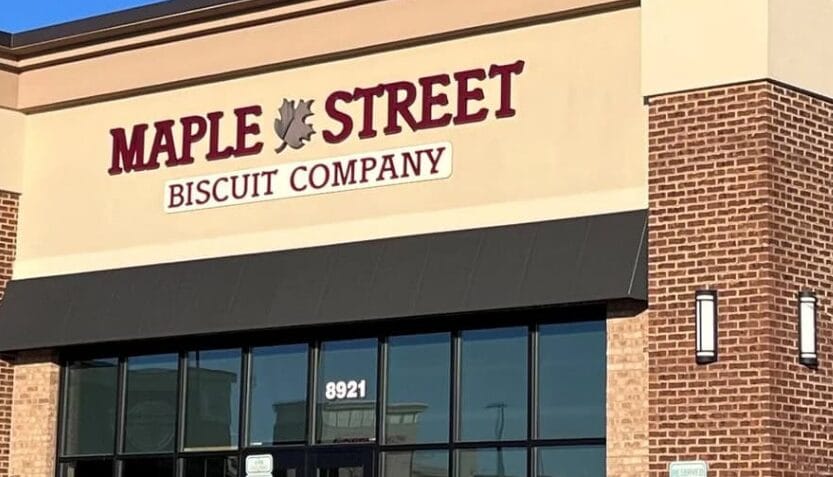
Cracker Barrel acquired Maple Street Biscuit Company in October 2019 for approximately $36 million. At the time it was framed as a strategic growth move, a way for a 50-year-old casual dining chain to build a foothold in the fast-casual breakfast segment that was outperforming the broader restaurant industry.
Maple Street was a Jacksonville, Florida-born concept built around scratch-made biscuits, Southern comfort food, and a community-focused neighborhood restaurant atmosphere. It had 33 locations at the time of acquisition and was growing. The idea was that Cracker Barrel’s operational infrastructure and capital could accelerate that growth while Maple Street’s fast-casual credentials gave the parent company exposure to a younger, more urban customer base that was not walking through Cracker Barrel’s highway exit doors.
It was a reasonable thesis. It has not played out.
Seven years of underperformance
Maple Street never delivered the growth Cracker Barrel projected. The pandemic hit the concept hard given its urban, dine-in-focused model. The chain never fully recovered traffic after 2020. Cracker Barrel began closing underperforming Maple Street locations in fiscal 2025, shuttering 14 restaurants in the first quarter of fiscal 2026 alone. By the time Q3 fiscal 2026 earnings arrived, the Jax Daily Record reported that two more Maple Street locations had been closed during the quarter, bringing the total chain down to 52 locations from what had been a much larger footprint.
That is 16 closures in a single fiscal year. For a chain that had 33 locations when Cracker Barrel bought it, the current count of 52 reflects years of expansion followed by a sharp contraction that has now wiped out a significant portion of the network.
Why Cracker Barrel Is Not Talking About It
The numbers are never broken out
Cracker Barrel has never reported separate financial data for Maple Street Biscuit Company. Every quarterly earnings report includes a footnote on restaurant metrics stating that comparable store data is for Cracker Barrel restaurants only and excludes Maple Street. The chain exists inside the consolidated financials but its contribution, or drag, on revenue and profitability is never isolated for investors or analysts.
That structure makes it easy to not discuss. When you do not report the numbers separately, you are never directly asked to defend them. And when nobody asks about Maple Street on an earnings call, executives have no obligation to bring it up voluntarily.
Management has bigger problems to address
The Q3 2026 earnings call was focused entirely on the Cracker Barrel turnaround story. The Q3 results beat expectations dramatically. The stock jumped 24.8% on the day. The loyalty program hit 12 million members. Google ratings reached an eight-year high. Management had genuinely good news to deliver and wanted to stay on that narrative.
Introducing a discussion of a struggling sub-brand that has closed 16 locations in a year would have undercut the momentum of the call. Executives made a calculation that analysts would not press the issue, and they were right. Nobody asked about Maple Street.
The closures were disclosed quietly in SEC filings
The Maple Street closure information did not come from a press release or an earnings call statement. It came from the quarterly report filed with the Securities and Exchange Commission, where the company noted that 16 restaurants had been closed during fiscal 2026 because of poor operating performance. That exact phrase, poor operating performance, is the entirety of what Cracker Barrel said publicly about a chain it paid $36 million for and has been closing one location at a time ever since.
What the Maple Street Closures Mean for Cracker Barrel
$36 million and counting in losses
The acquisition price was $36 million. That number does not include the capital invested in new Maple Street locations opened after 2019, the operational losses accumulated during the pandemic years, the management attention diverted from the core Cracker Barrel business during the worst of its own turnaround period, or the closing costs associated with each shuttered location. The total cost of the Maple Street experiment is materially higher than the purchase price suggests.
This follows a pattern for Cracker Barrel that goes back further than most people remember. The chain also invested in Punch Bowl Social, a dining and entertainment concept, which filed for Chapter 11 bankruptcy in 2020 and cost Cracker Barrel approximately $132.9 million. Both investments shared the same underlying logic: use capital from the core business to build exposure to trendier concepts that might attract younger customers. Both failed. The core business paid for both failures.
The remaining 52 locations are presumably the strongest performers
Cracker Barrel is not announcing that Maple Street is being wound down entirely. The 52 remaining locations are presumably the ones that have demonstrated enough operational viability to justify keeping open. The closures have been framed consistently as performance-based decisions rather than a strategic exit from the concept.
But 52 locations of a fast-casual concept in an industry where scale matters is a difficult position. The marketing spend per location, supply chain costs, and corporate overhead associated with maintaining a separate brand are harder to justify at 52 locations than they would be at 100 or 150. Whether Cracker Barrel eventually sells Maple Street, closes it down entirely, or finds a way to stabilize the remaining footprint is one of the quieter strategic questions hanging over the company as it works through its core business turnaround.
Attention and capital belong on the core business right now
The clearest argument for exiting Maple Street entirely is opportunity cost. Cracker Barrel has 660 locations producing over $3 billion in annual revenue that are currently in recovery mode. Every dollar of management attention and capital that goes toward maintaining a 52-location fast-casual brand is a dollar not going toward improving kitchen execution, building the loyalty program, expanding catering, or opening carefully selected new Cracker Barrel locations.
The Q3 2026 results showed what happens when Cracker Barrel focuses on its core business. Guest satisfaction at an eight-year high. Retail comps outperforming restaurant comps for the first time in four years. A 169% earnings beat. A 24.8% single-day stock gain. That is what the company is capable of when it concentrates.
Maple Street is a distraction from that concentration. Whether the company is ready to admit that publicly is a different question. Based on the June 9 earnings call, the answer is not yet.
For full context on Cracker Barrel’s pattern of outside investments and what they have cost the company, the why Cracker Barrel is struggling page covers the Punch Bowl Social losses and the broader capital allocation history in detail. The Q3 earnings story including the stock jump and guidance raise is covered in the Cracker Barrel Q3 2026 article. Current stock performance is tracked on the Cracker Barrel stock price page.
Frequently Asked Questions
What is Maple Street Biscuit Company?
Maple Street Biscuit Company is a fast-casual breakfast and brunch chain built around scratch-made biscuits and Southern comfort food. Cracker Barrel acquired it in October 2019 for approximately $36 million. The chain currently operates 52 locations after closing 16 restaurants during fiscal 2026 due to poor operating performance.
Is Maple Street Biscuit Company closing down?
Cracker Barrel has not announced plans to close Maple Street entirely. However, 16 locations were shuttered during fiscal 2026, disclosed in SEC filings as closures due to poor operating performance. The chain has been reduced to 52 locations and Cracker Barrel executives made no mention of Maple Street during the Q3 2026 earnings call.
How much did Cracker Barrel pay for Maple Street Biscuit Company?
Cracker Barrel paid approximately $36 million to acquire Maple Street Biscuit Company in October 2019. The chain had 33 locations at the time of purchase. The total cost including post-acquisition investment, operational losses, and closure costs is significantly higher than the initial purchase price.
Why is Cracker Barrel closing Maple Street Biscuit Company locations?
Cracker Barrel has cited poor operating performance as the reason for each closure. The company has not provided more specific explanations publicly. Maple Street’s urban, dine-in-focused model was hit hard by the pandemic and the chain never fully recovered traffic to pre-2020 levels.
Does Cracker Barrel report Maple Street financial results separately?
No. Cracker Barrel does not break out Maple Street Biscuit Company revenue, profit, or traffic data in its quarterly earnings reports. All comparable store metrics reported by Cracker Barrel are for Cracker Barrel Old Country Store locations only and explicitly exclude Maple Street.

